Euglena sanguinea belongs to the genusEuglena under the phylum Euglenophyta. It is a unicellular, pleomorphic alga without a cell wall, possessing only a soft periplast. The cells are spindle-shaped, with a blunt front end and a gradually tapered rear end, equipped with a single flagellum for locomotion and a distinct eyespot. It exhibits extremely strong phototaxis and is a typical surface planktonic alga, with over 90% of the population concentrated in the 0–50 cm surface layer of water bodies.
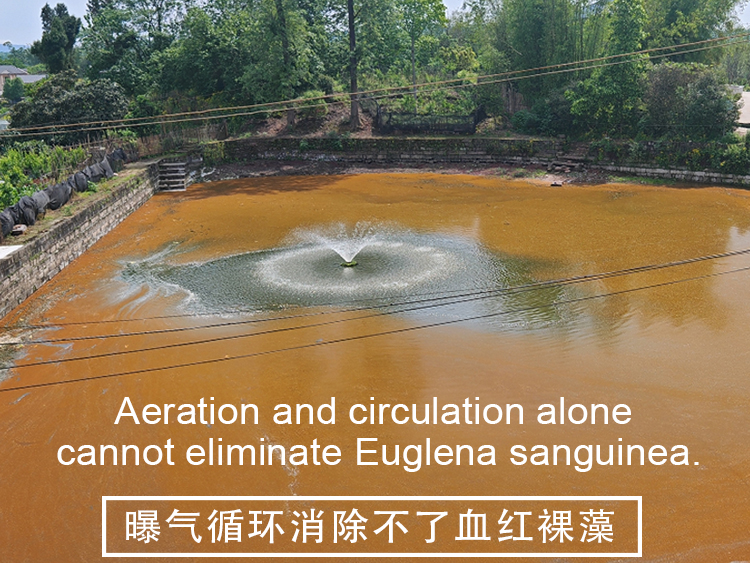
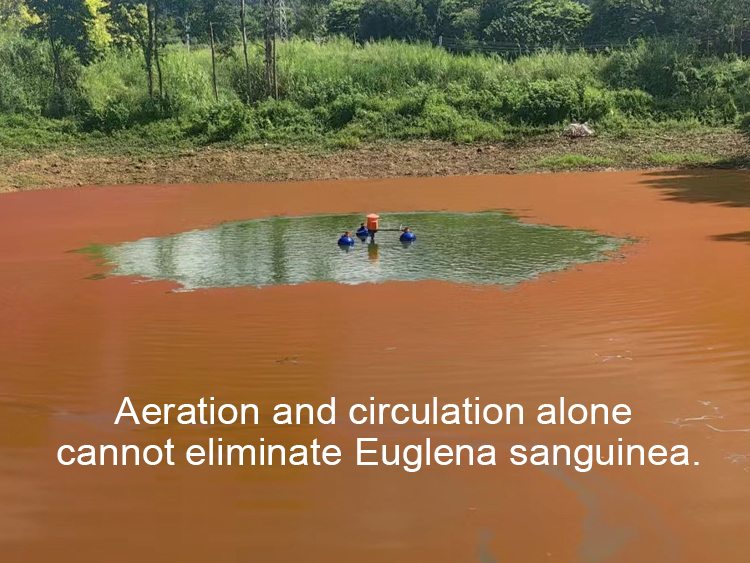
The cells contain hematochrome (carotenoids), and when the population density becomes excessively high, the water turns rusty red or blood red, making it prone to forming conspicuous algal blooms. This alga is facultatively heterotrophic: it performs photosynthetic autotrophy in light conditions and absorbs organic matter through osmotrophic saprophytism in the absence of light. It reproduces primarily via asexual longitudinal binary fission and proliferates extremely rapidly under favorable conditions.
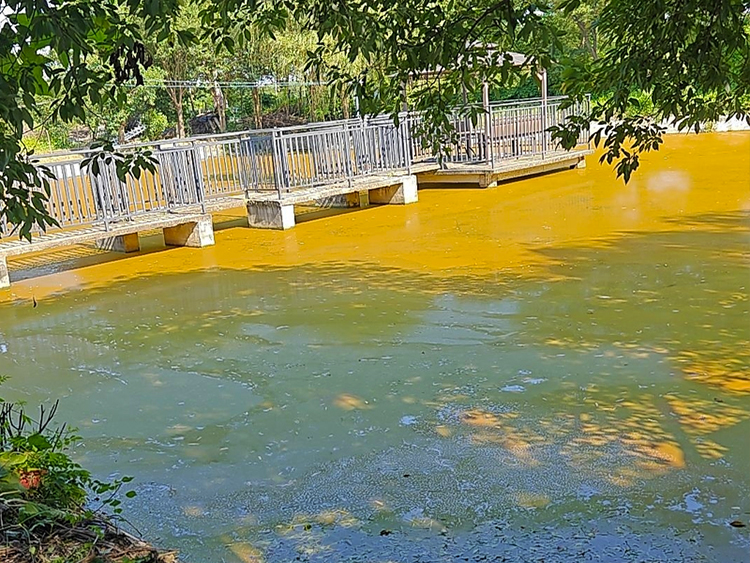
It thrives at an optimal temperature of 23–27°C, tolerating a range of 20–35°C, and prefers neutral to weakly alkaline water (pH 7.0–8.5) that is stagnant, slow-flowing, and eutrophic. Blooms commonly occur in summer with high temperatures and strong light, and the alga displays a diurnal migration pattern of floating upward during the day and sinking slightly at night.
The explosive proliferation of Euglena sanguinea leads to red "rusty water" blooms. Large-scale coverage of the water surface severely damages the landscape aesthetics, particularly impairing the visual appeal and functionality of landscape lakes, drinking water sources, and aquaculture ponds. Once blooms form, the surface algal layer blocks sunlight, preventing photosynthesis in submerged aquatic plants, leading to plant decay and disrupting the bottom ecological balance of water bodies.
When large numbers of algal cells die, they are rapidly decomposed by microorganisms, which drastically consumes dissolved oxygen in the water, causing hypoxia that suffocates fish, shrimp, and benthic organisms and deteriorates water quality. Meanwhile, the decomposition process releases odorous substances, making the water fishy and malodorous and further worsening water quality. Additionally, high-density algal cells can clog filters of water treatment equipment, disrupting the normal operation of water supply and circulation systems and increasing water treatment and operation and maintenance costs.
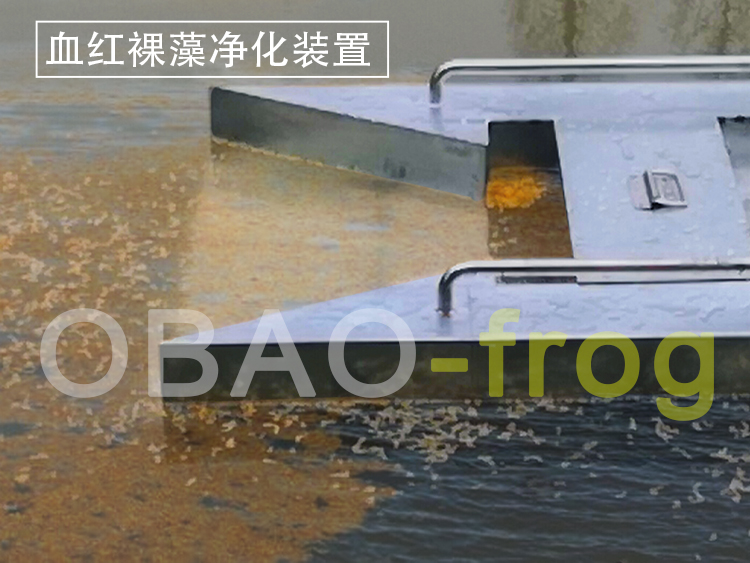
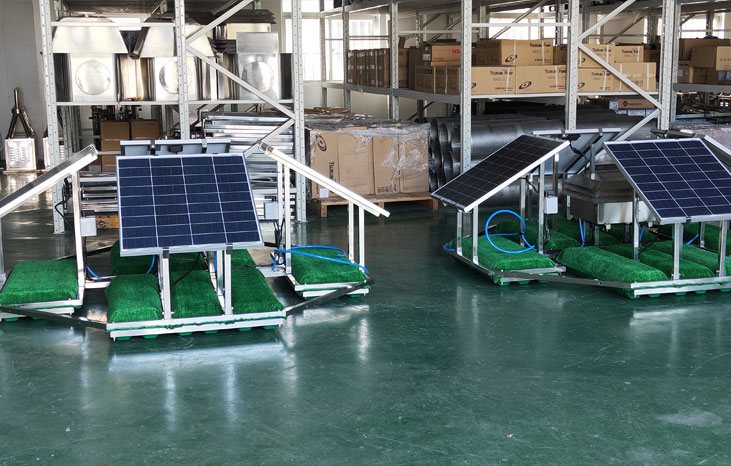
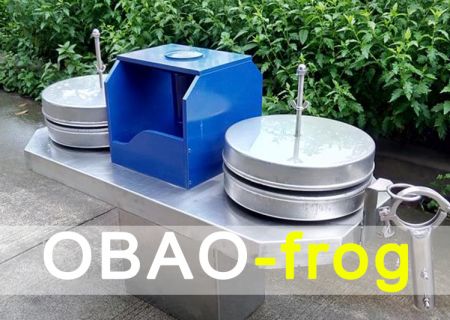
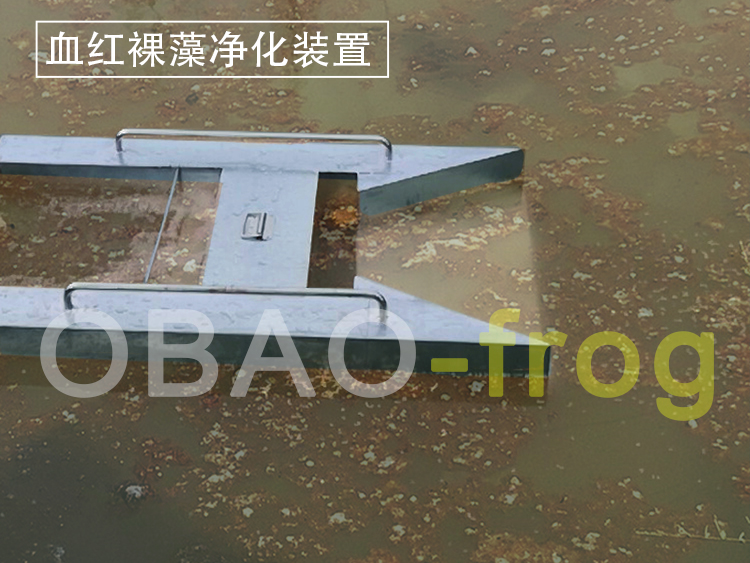
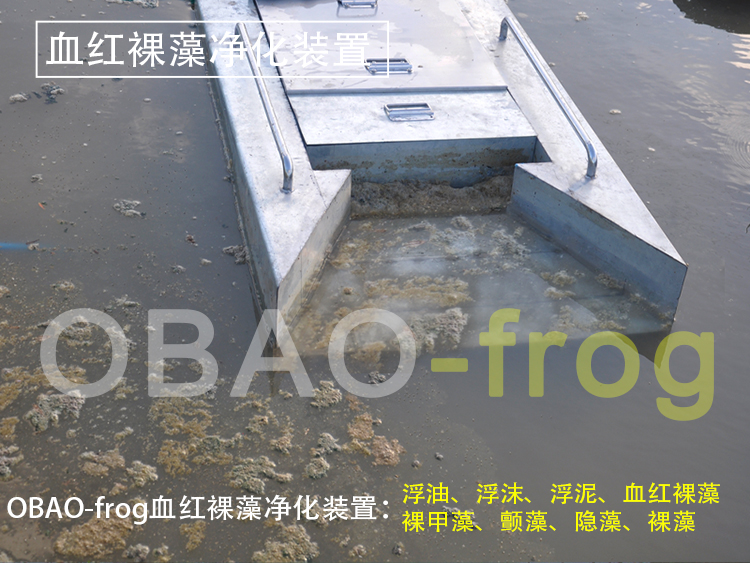
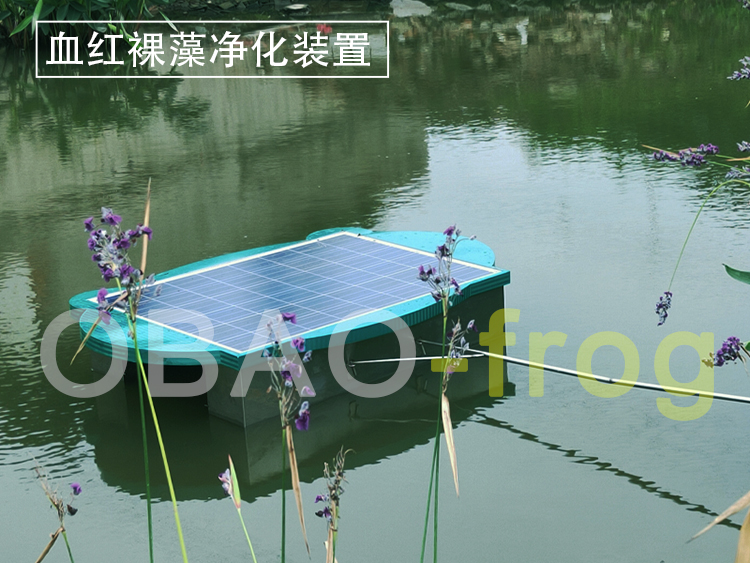
The OBAO-FROG Euglena sanguinea Purification Device does not kill the algae outright; instead, it inhibits their reproduction, preventing them from growing and forming blooms. The device targets three fatal weaknesses of Euglena sanguinea to achieve algal cell reduction:Firstly, Euglena sanguinea is extremely light-dependent and highly phototactic. As a surface alga, it relies on strong surface light for rapid reproduction, and a sharp drop in light halts its photosynthesis. Secondly, the alga easily adheres to objects near the water surface with rough or adsorptive surfaces; in the filler zone of the device, its flagella cannot support upward floating or aggregation, leading to gradual population decline. Thirdly, Euglena sanguinea serves as bait for aquatic organisms, and small zooplankton such as Cladocera (water fleas) and Copepoda prey on the algae, preventing their rapid growth and population expansion.
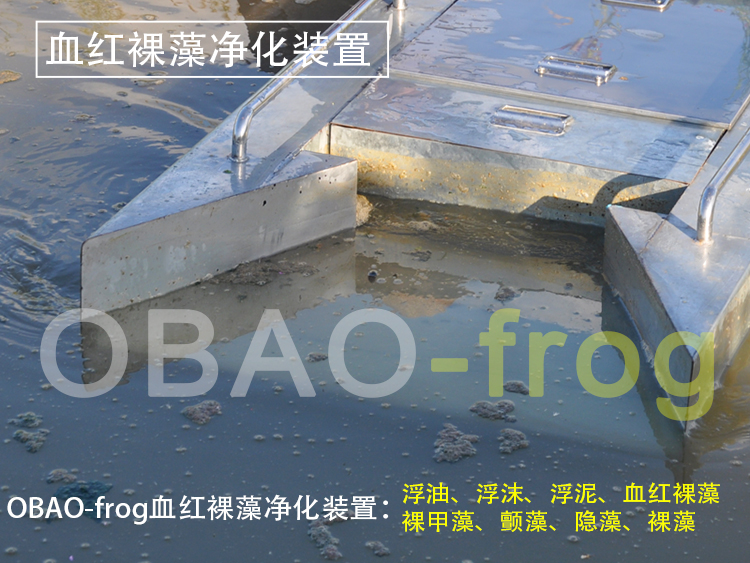
Notably, the OBAO-FROG device not only controlsEuglena sanguinea but also purifies water quality, removes floating debris and other algae from the water surface, continuously injects dissolved oxygen into the water, and promotes water circulation.
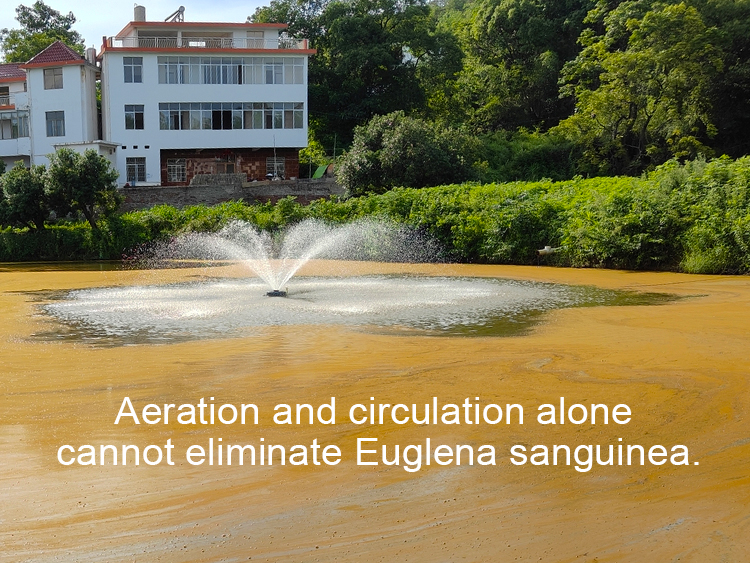
Facts have proven that aeration alone cannot resolve Euglena sanguinea blooms.
Aeration and circulation does not target the biological characteristics of Euglena sanguinea to inhibit its growth and reproduction.
For more details on Euglena sanguinea control, please consult Mr. LeoLv, Technical Director of Shanghai Oubao Environmental Technology Co., Ltd.
OBAO-FROG血红裸藻净化装置不是杀死血红裸藻,而是抑制它的繁殖,让它长不起来、无法形成水华。
VARIOUS WATER ENVIRONMENT TREATMENT
SCHEMES水环境治理方案案例
水库水生态修复 | 蓝藻水华治理 | 生态清洁小流域
黑臭河道
景观湖
水源地
氧化塘
人工湖
上海松江九亭入河污排口治理-欧保环境
入河排污口是污染物进入河道的最后关口。排污口有的很隐蔽,晴天不易发,河道治理的现场踏勘很重要。
水库水华的蓝藻治理应用(一)
采用太阳能控藻机对重庆某水库水华控进行治理,一个月时间达到蓝藻治理的目的,第二年进本没有出现蓝藻。

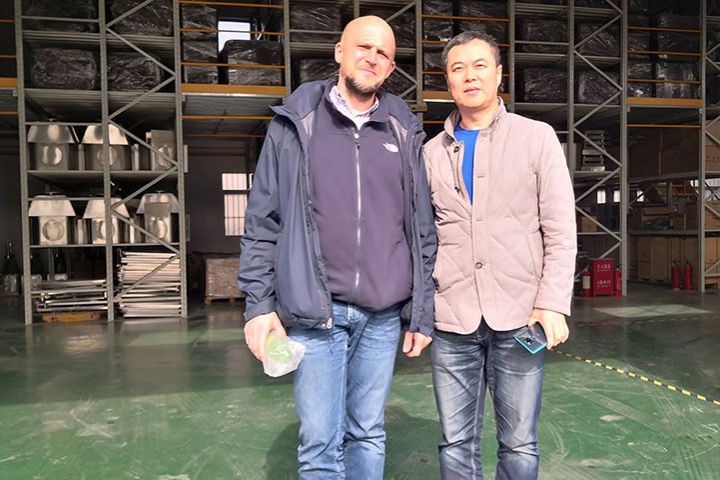
波兰客商考察欧保公司人工浮岛意向代理欧洲三国市场
波兰客商考察欧保公司人工浮岛,对公司生产的7人工浮岛,探讨低温情况下的结构改造意见,并意向代理欧洲三国市场。欧保公司2002年开始从事人工浮岛(后期升级为浮动湿地)研发生产的企业之一,2003年第一批浮岛在北京河道治理中得到应用。
南京市溧水区农村污水处理改造
近几年农村污水处理力度很大,但是出现的较高比例的闲置和不达标问题。欧保微生态单元治理法,结合地形地貌及农污的特征进行了很多项目改造,取得很好的水质和景观效果。微生态单元治理法将污水进行阶梯式流程化处理,分高浓度、低浓度、尾端提标三段法处理。能搞耐受水量冲击,污水浓度波动,同时实现节能与资源化利用的目的。
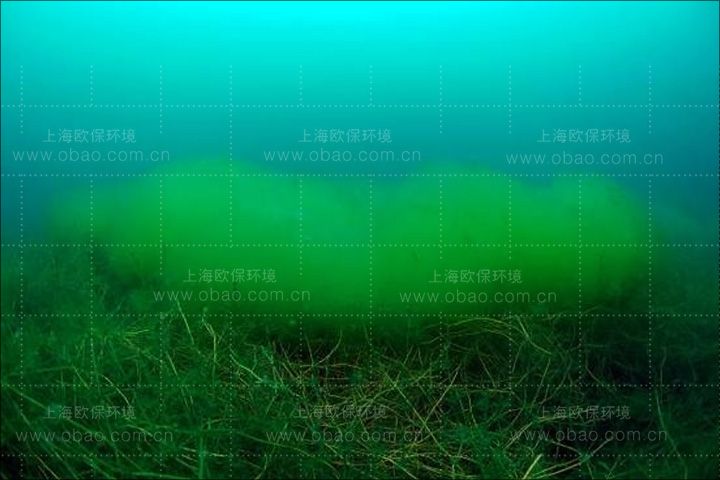
河道池塘湖泊水棉治理-上海欧保
欧保环境实施过80多个河道、池塘水体的水棉治理,探索出经济快捷的清除水绵,很快恢复水体健康。
ENGINEERING CASE欧保环境技术企业
河道治理 | 农村污水治理 | 水环境治理
18000㎡试验基地模拟治理场景
1V1定制免费设计 1V1定制 专业安装
高新技术企业质保维护3年 技术支持
产品推荐PRODUCT
RECOMMENDATIONMORE+
新闻资讯RELATED INFORMATIONMORE +